


Very few people look forward to filing their taxes each year, so it's no surprise many of us will put it off as long as possible. However, if you’re late filing your taxes, you could face extra tax penalties and interest. That means knowing the deadline to file your taxes is important for your wallet.
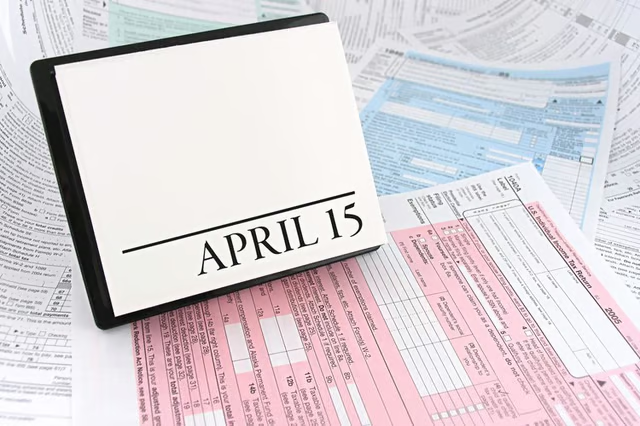
Normally, your taxes are due on April 15 and you can mail your taxes on April 15 and still be on time as long as the envelope gets postmarked that day. For the 2020 personal federal tax return due in 2021, the due date is now May 17. This is for the federal return only.
Read More: IRS Delays 2020 Personal Tax Return Filing Deadline to May 17
IRS Filing Deadline
The deadline for filing your taxes is the 15th day of the fourth month after the end of the fiscal year. Because most people use a calendar year for their tax filing, that means most individual tax returns are due on April 15. However, if April 15 falls on a weekend or holiday, the tax filing deadline is pushed back to the next day that isn’t a weekend or holiday.
The deadline for filing tax returns for the 2019 tax year was extended to July 15th, 2020, rather than April 15, 2020 because of the COVID-19 outbreak. The filing deadline for the 2020 tax year will be April 15th, 2021, as this date is neither a weekend or a holiday.
Deeming the Return Filed
If you file your taxes with a paper return, the IRS considers your return filed on time if it is properly addressed, has enough postage and is postmarked on or before your tax filing due date. For certified mail, the postmark date is deemed to be the date the envelope is registered. For private delivery services, the IRS looks at the date stored in the private delivery service database or at marks on the mailing label. So, as long as your tax return is postmarked on or before April 15, or any later filing deadline for the tax year, your return is considered timely filed.
If you file your taxes online, the IRS uses the timestamp of when the return was electronically transmitted to determine whether your return was filed on time. The timestamp for your local time zone is the one that determines whether it was timely filed or not. For example, if you live on the West Coast, you have a few extra hours to get your returns electronically submitted than you would if you lived on the East Coast.
Requesting a Tax Extension
If you won’t be able to get your tax return completed in time, you’re entitled to an automatic extension to file your return. You can request an extension either by filing a paper Form 4868 or e-filing Form 4868. The extension gives you an additional six months to submit your tax return to the IRS without being hit with any late filing penalties. Alternatively, you receive the automatic six-month extension when you make an estimated tax payment by using a credit or debit card, or a direct transfer from your bank account.
Read More: Can You File Taxes Late Without Penalty if the IRS Owes You Money?
Making Payments Due
If you request an extension for your taxes, that extension only applies to when your tax return must be filed, not the date by which you must pay your taxes. Therefore, if you owe taxes, you must pay them by your normal tax filing deadline, or interest and penalties will start accruing on your balance due.
Even if you can’t complete your tax return in time, you can still estimate what you’ll owe and make an estimated tax payment by the April 15 deadline. If you overpay your tax liability, you’ll receive the excess back as a tax refund when you eventually file your return.
For example, say you know you can’t file your return by April 15, but you are almost certain you won’t owe more than $2,000 when you do file. If you make a $2,000 payment with an electronic transfer from your bank account by the tax payment deadline, and when you file your return it turns out you only owe $1,500, you’ll receive a $500 refund.
Read More: What If You Miss a Year Filing Your Taxes?
