


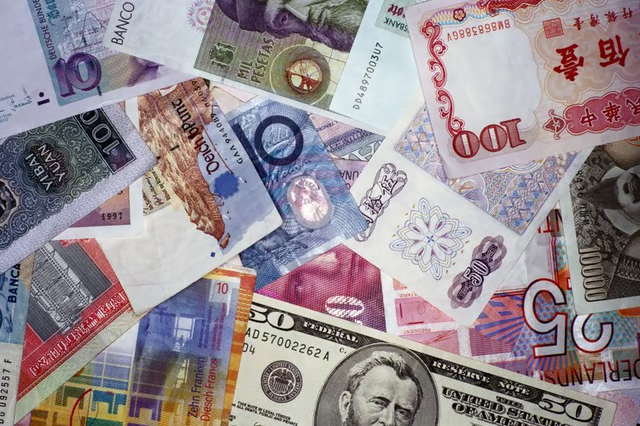
Companies that conduct transactions across international lines are exposed to the risk associated with dealing in foreign currencies. It is the risk that a company doing business abroad will lose money if the current foreign exchange rate between the home and foreign country changes negatively during the course of a transaction. This is called the foreign exchange rate risk and must be managed effectively to protect the home company's exposure to adverse changes in the foreign exchange market.
Use a foreign exchange contract. This type of contract eliminates the foreign exchange rate risk because the contract sets the current exchange rate as the exchange rate for the date of a future transaction. For example, a U.S. company can purchase goods from a foreign company at the current favorable exchange rate at a later date, regardless of whether the exchange rate on the future date is different.
Maintain the same level of foreign purchases and sales. For example, a company will purchase products from a company in India using the local currency, rupees, then sell goods to another company in India and insist the company uses rupees as payment. The foreign exchange rate risk is minimized because money is not converted from rupees to dollars and vice-versa.
Operate in many foreign markets to minimize the overall risk. For example, a U.S. company that imports products may experience a loss if one country's currency appreciates in value against the U.S. dollar. However, the company's losses can be recouped if the currency in another country it imports from devalues against the U.S. dollar, which reduces the amount of money it has to pay for the same amount of goods.
Accept payment for goods and services from foreign companies in U.S. dollars only. The risk is mitigated because the currency rate of exchange between the home company and the foreign company is no longer a factor, since both companies are only using the U.S. dollar.
Invest in strong, stable markets. If your company establishes investments in foreign markets where the economy is strong, the value of the investment will remain intact because the exchange rate between the two countries will remain relatively the same. However, if your company invests in an unstable country and the value of the foreign currency decreases against the U.S. dollar, then the value of any investments also decreases.
