
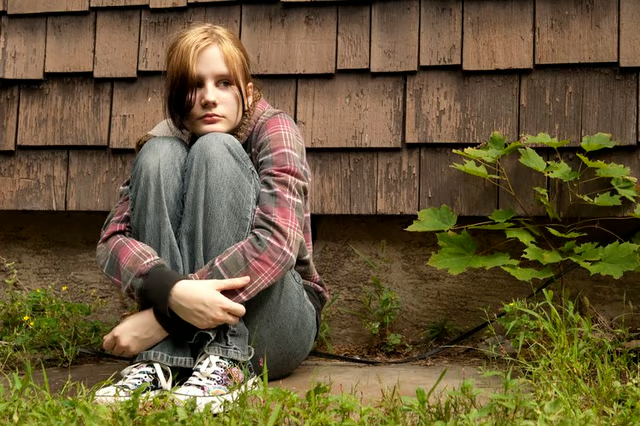


For teens who lack family support, successfully transitioning to independence often is a scary time fraught with obstacles. Independent-living programs are designed to help teens successfully transition to independence. The large majority of ILPs are designed prepare children of the foster-care system for life on their own. However, programs are available for homeless youth or any other youth having trouble transitioning to independence. Contact your local Department of Health and Human Services to find out about local independent living programs.
Goals and Missions
Independent-living programs are sanctioned by the United States government and as such are under its directives. The goals and missions of ILPs are to provide youth with the skills, training and financial assistance they need to transition to leading successful lives as independent adults. To be approved by the government, independent-living programs must address key areas of educational and vocational training, life skills and emotional well being.
Life Skills and Training
Services and training include budgeting and money management, self-care, food management, decision making, job training, goal setting and developing life plans. Teens are given assistance with education planning, getting their high-school diplomas or GEDs, transportation to attend work, school or other appointments and building self-esteem. Youths with challenges such as autism spectrum disorders are given skills training to live independently or semi-independently.
Counseling and Emotional Well Being
ILPs help make sure teens are emotionally and mentally ready to handle life as adults on their own. Counseling is offered for substance abuse, mental health issues and other barriers. Programs also include family counseling to help mend broken familial bonds. Other counseling areas include social counseling to make sure teens are prepared to socialize independently as adults, and emotional well-being counseling to help teens become emotionally stable enough to live on their own.
Transitioning Out
As teens transition out of the program, typically at age 18 -- or 21 for extended programs -- independent-living programs provide them with resources to give them the best chances at successful independence. ILPs provide financial assistance with college or other vocational school as well as financial aid for housing until the 21st birthday. Transitioning teens also receive assistance with job placement and help getting a solid footing in life.
