
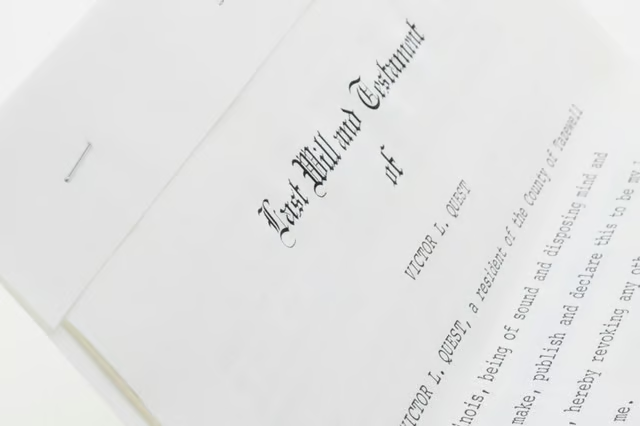


In most cases, after a person dies in Texas and leaves a will, the will goes through the probate process to distribute the assets to the heirs. Although the probate process is considered simple and inexpensive in Texas, some instances occur when families desire to avoid the probate process. When a will is not probated in Texas, the end result depends on the alternative option implemented by the family. In most cases, the assets are distributed to the heirs according to the will and nonprobate assets are distributed to the beneficiaries.
Nonprobate Assets
Certain assets are exempt from the probate process in Texas. When a person a dies and leaves nonprobate assets, the beneficiaries receive the assets without the will going though probate. Common exempt assets include a living trust, life insurance, annuities, retirement benefits, community property and assets owned with a joint owner. When you create a living trust, all of your assets are legally held by a trustee. After your death, the trustee distributes the assets to your beneficiaries according to your specifications. If you own property with a spouse that survives after your death, the property is left to the spouse without going through probate.
Muniment of Title
In Texas, a muniment of title is used for an estate that is left in a will without any outstanding debt, except for the mortgage. It allows for a quick distribution of assets to the heirs of a will. Entering a will as a muniment of title requires an individual to file the will with the probate court, but no further steps or taken in the probate process. After the will is entered, a judge signs the muniment of title and it is filed with real property records in the county of the property's location. Once this is complete, the property left in the will is transferred to the beneficiary.
Informal Family Settlement
With an informal family settlement, it is not necessary to file a will with the probate courts. The beneficiaries of a will must enter into an agreement regarding the distribution of assets and place the agreement in writing. Taking advantage of an informal family settlement to avoid probate requires that all beneficiaries are at least 18 years old. If the will contains a property that requires a formal administration to become the owner, the beneficiaries of the will cannot settle it through an informal family settlement.
Neglecting to Go Through Probate
Texas does not require that a will go through the probate process. If the heirs of a will must go through the process to receive the assets of a will, neglecting to file the will holds up the process of distributing the assets. In some cases, families choose not to go through the probate process because of the associated process time and cost. According to attorney Dianne Reis, individuals should think of a probate as a service and not a requirement.
