
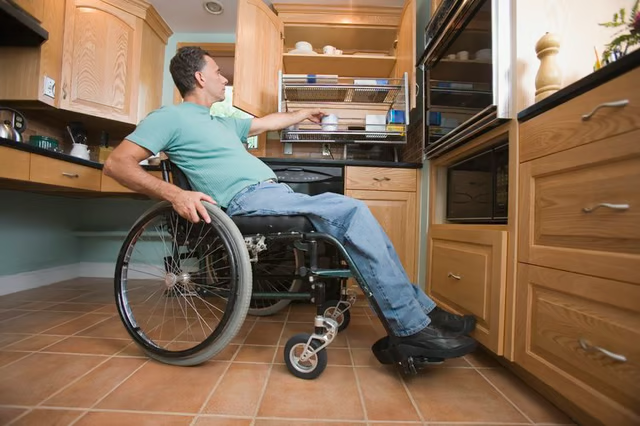


As many as 54 million Americans were living with disabilities in 2005, according to the U.S. Census Bureau’s Survey of Income and Program Participation. Of those, 70 percent were unemployed, 27.1 percent lived below the poverty level, and 57 percent of people with severe disabilities made use of government help such as subsidized housing and cash assistance to survive. People living with disabilities can buy a home, however, if they qualify for one of the federal or state programs providing down payment assistance.
American Dream
President George W. Bush signed the American Dream Downpayment Assistance Act in 2003, which made $200 million per year available. The program gives eligible applicants assistance for home down payments and closing costs up to a maximum of $10,000 or 6 percent of the purchase price. Applicants must be first-time homebuyers, or buyers who have not owned a home in the preceding three years, must have incomes lower than 80 percent of the median for the area, and must purchase a one- to four-family unit.
Individual Development Accounts
Individual Development Accounts are matched savings accounts, which help low-income families save toward a down payment on a home. These accounts are available to Americans with disabilities, provided they are not drawing Supplemental Security Income, or SSI, benefits, as they no longer qualify for SSI once they have accumulated assets of more than $2,000. The World Institute on Disability, however, is looking into the barrier that this restriction presents.
Washington
According to the Disabled World website, down payment assistance for disabled people is available in a number of states. Washington State's HomeChoice Second Mortgage, for instance, is a down payment assistance program for eligible applicants with a disability or who have a disabled family member who lives with them. The program funds up to $15,000 and offers a first mortgage option for the balance.
Wisconsin
In Wisconsin, grants up to $7,500 for down payment or closing costs are available to applicants with disabilities or to applicants with a disabled family member whose income is less than 60 percent of the median for the county. The grant is forgiven provided the homeowner retains the home for five years.
New York
New York City’s Mayor Bloomberg implemented the HomeFirst Down Payment Assistance program, administered by the Department of Housing Preservation and Development. This program provides qualified low-income buyers, including those with disabilities, with down payment assistance of up to $10,000 or 6 percent of the purchase price of a home in any of the city’s five boroughs.
State Assistance
States with similar programs include Colorado, Florida, Georgia, Idaho, Illinois, Indiana, Kansas, Montana, Nebraska, North and South Carolina, Oklahoma, Rhode Island, Texas, Utah, Vermont, Virginia and Wyoming. Nonprofit organizations or the local departments of housing operate most of these programs, and while some are available to all low-income families, others are specifically geared toward people living with disabilities.
