


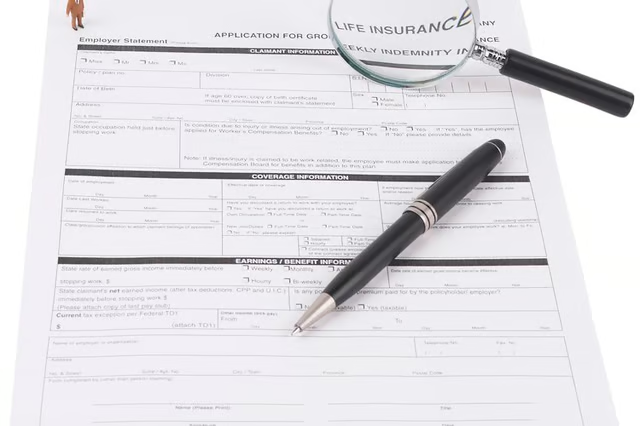
A collateral assignment refers to the transfer of ownership rights of an asset. When you borrow money, or when someone spends money on your behalf, often they will require you to pledge collateral in the form of an asset in order to protect them from loss. There are several basic uses for collateral assignment releases, usually in insurance or real-estate transactions.
Split Dollar Life Insurance
The term "split dollar" refers to the way the premium on your life insurance policy is paid. If you buy your life insurance under such an arrangement, your employer will split the cost of the premium with you. This reduces the cost of life insurance for you and it benefits the employer by giving you an incentive to remain with the company.
Split Dollar Collateral Method
If you purchase life insurance using the collateral method, you own the insurance policy, not your employer. However, you will be required to sign a collateral assignment release form that transfers ownership of the policy's death benefit to your employer. This protects your employer, as it gives him a guarantee that he will be compensated for the payments made over the life of the policy. When you die, the company will deduct the premium payments it made for the policy and release the remaining benefit to your beneficiary.
Collateral Assignment of a Mortgage Deed
When you buy a home or other property by taking on a mortgage with a lender, sometimes your lender will turn around and sell your mortgage to other investors. In order to offer investors security in case you default on the loan, your original lender will assign the loan's collateral over to the investors who purchased your loan. The collateral assignment release in this instance is a document that transfers the deed on your home to the investors who purchased your loan.
Using Life Insurance Benefits as Collateral For a Loan
When you borrow money from a lender to purchase an asset, such as a house or a car, the loan is secured by the asset you purchased. Some loans, such as small business loans, are not secured by assets, so they may require you to purchase a life insurance policy, which will protect them in case you die before the loan is paid off. In this case, you would sign a collateral release that transfers the death benefit of the life insurance policy to your lender.
