


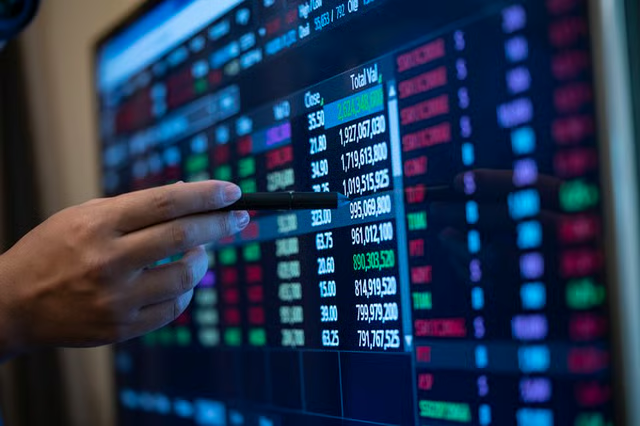
The stock volume is the number of shares of a company's stock that trades on a day, week, or some other period without adjusting for stock splits. The trading volume depends on the number of orders from individual and institutional investors. When the trading volume of a company's shares falls to zero, it means that the stock exchange is no longer accepting or processing buy or sell orders. This stoppage could be for a few hours, or it could be a permanent situation.
Temporary Trading Halt
Stock exchanges may impose temporary trading halts on a company's stock. This situation usually occurs when the company has or is about to announce material financial news, such as a buyout offer from a competitor. An order imbalance between buyers and sellers could also result in a trading halt, which means that the trading volume is zero.
When a company is reorganizing its operations under a court-supervised bankruptcy proceeding, the stock exchange usually orders a trading halt. Trading may resume if the company emerges from bankruptcy and keeps its former stock symbol.
Company Goes Private
A stock volume could also fall to zero when a company goes private. A publicly traded company could de-register its shares if it has less than a certain number of shareholders. The company may offer to buy back all of its outstanding shares if it believes that the share price is too low or if it has made a strategic decision to become a private company.
After the company acquires the required number of shares, the shares stop trading and the stock volume falls to zero. The company could also declare a reverse stock split to reduce the share count below a certain threshold quantity and then de-register the shares.
Company Is Restructuring
Restructuring operations could also result in a company's stock volume going to zero. For example, a company could decide to put itself up for sale. If it gets a successful buyout offer and the shareholders agree to tender their shares, the company delists from the stock exchange and the share volume goes to zero. When two companies merge to create a new company, the shares in the legacy companies stop trading.
Stock Volume Considerations for Investors
Investors can do little when a company's shares stop trading except to try to analyze the reasons why the stock volume has dropped to zero. They can find the information they need by visiting websites for stock market news. If they discover the news is negative, such as an impending bankruptcy or the loss of a major customer, the share price may drop sharply once the exchange lifts its trading halt.
However, if the long-term business fundamentals are sound, investors may decide to hold on to their stock and wait for the situation to improve. It is possible that the stock will gain momentum as it reflects the company's underlying fundamental values over the long term. For mergers and buyouts, the investors get new shares, which could offer better long-term returns than the old ones.
