


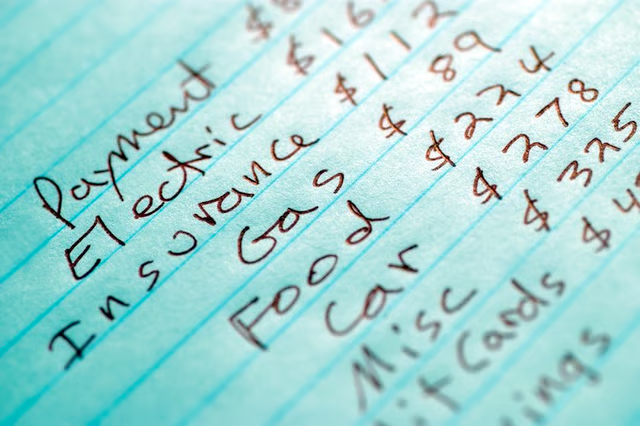
Creating a budget and planning your spending might not be the best way to improve and manage your personal finances. That’s because overspending, or “accidental spending,” is a key cause of money problems for many people. Tracking your monthly spending is just as important – and might be a better way to see if you’ve been spending money you really don’t need to.
To get a better handle on your spending, classify your monthly purchases and payments into categories such as discretionary and necessary, or essential and non-essential expenses.
Consider Also: Form 1040: What You Need to Know
Essential vs. Non-Essential Expenses
As you budget, it’s helpful to use a form that provides you with some automatic updates and lets you make projections for the entire year. You can use an Excel spreadsheet, a software program like Quicken or a digital personal finance app – some of which are free.
The simplest definition of an essential expense is one that you must pay. These can include:
- Rent/mortgage
- Utilities
- Groceries
- Car payment
- Student loan
- Credit card monthly minimum payments
- Health insurance
- Phone
- Tuition
- Internet
- Insurance
You might consider cable, non-business internet, dining out and some entertainment expenses as essential to your lifestyle, but if you are looking at missing payments that will damage your credit or possibly going into personal bankruptcy, these aren’t essential expenses.
Consider Also: What if I Make a Mistake on My Taxes?
Are Savings an Expense?
If you are budgeting money each month for a mortgage down payment, retirement contribution, kids' tuition fund, debt reduction or vacation fund, these might be very important to you personally, but you can skip them and not damage your credit or move closer to bankruptcy.
Rank these monthly savings categories in order of importance so that if you run into a serious money crunch, you’ll know which of these goals you can delay, if necessary.
Fixed vs. Variable Expenses
Some recurring expenses are fixed, meaning they are the same amount each month. Examples include your insurance, auto loan and phone bills. Others are recurring variable expenses, such as utilities, groceries and credit card payments. If you are creating an annual budget, estimate what your average monthly payments will be to help you plan your budgeting.
Create Last Year’s Budget
One way to see how much you might be overspending is to create a budget for the previous year using last year’s credit card and bank statements and information from any other personal finance apps you use to pay bills.
You might not realize that those Netflix rentals, value meals, music downloads and monthly gym fees that seem so small can add up to more than $10,000 annually in discretionary spending. Had you noticed this 10 years ago and cut that spending in half, you’d have $25,000 in the bank right now, or zero credit card debt, or a fatter 401(k) account.
You’ll need to set aside an hour or more to look at each credit or debit card purchase you made last year and start tracking them this year if you want to see how much you’re spending on non-essential items. It might seem like a pain, but it can help you increase your retirement savings by hundreds of thousands of dollars by the time you retire.
If you’re surprised by how much you’re spending on food, consider buying fewer restaurant meals and having fewer meals delivered and learning some basic cooking skills. Learn how to smart-shop to get more groceries for thousands of dollars less each year.
It All Adds Up
Let’s say you can cut one $12 lunch and one $3 cup of coffee per week, and one $40 trip to the movies per month. That’s $100 per month, or $1,200 per year. If you put that on a credit card with a 15 percent APR and carry that balance for one year before you pay it off, you’ve spent $1,380 per year purchasing those few items you can probably live without.
If you had put that into your 401(k) and your employer matched it, you’d have added an extra $2,760 to your retirement savings annually. Or, you could have paid down credit cards. And that’s just cutting out three items.
