
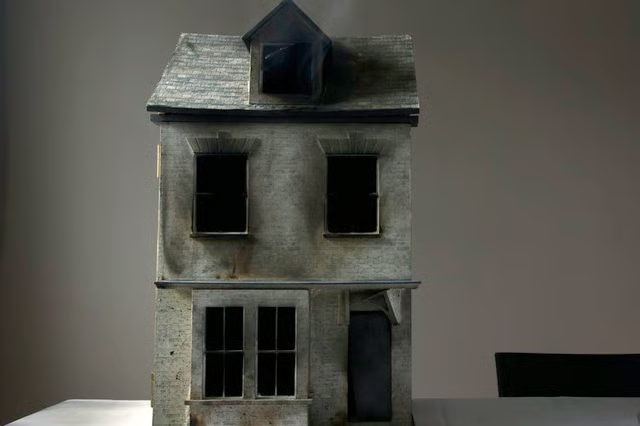


Mortgage escrow accounts are established by lenders to ensure on-time payment for real estate property taxes and homeowners insurance. A homeowner in foreclosure has failed to keep up the mortgage, property taxes or other debt secured by the home, and is unlikely to pay for homeowners insurance. Who pays the homeowners insurance when in foreclosure usually differs from who is actually responsible for its payment.
You're Still on the Hook
When you take out a loan that has a balance which exceeds 80 percent of your home's value, you usually have to establish an escrow account. Lenders use the accounts as an added measure of protection against losses, giving them control over tax and homeowners insurance payments. If you have no escrow account, you manage the payment of these bills on your own. When in foreclosure, you remain responsible for the property and all of its associated bills, including the homeowners insurance. Even if you have already moved out, you technically still own the house.
Homeowners Insurance Covers Lender, Too
Your lender has a financial interest in your property, which acts as collateral for the loan. This claim on your home allows it to foreclose and sell the property to recover its losses. Your house can suffer damage or be completely destroyed in a hazardous event such as a severe storm, fire or as the result of theft or vandalism. The risk of something happening to the house can increase if the home sits vacant. Your lender, which is likely to take over as the next owner of your home, therefore, must ensure that the home is adequately covered, so it buys insurance if it's needed.
What Can Happen to Insurance
Your current insurance provider, whether you have paid its premium for the year or not, can cancel your policy if you or your home become ineligible for coverage. This can happen if you no longer live in the property or the property's condition renders it uninsurable. As part of its preforeclosure research, your lender checks the status of your homeowners insurance. If the lender finds out your policy has lapsed, was cancelled, or deems your active coverage inadequate, it can buy a policy on your behalf, which is known as force-placed insurance.
Forcing Insurance on You
A force-placed insurance policy is usually more expensive than homeowner-chosen insurance, but it remains your expense. In a foreclosure, the lender adds the cost of a new insurance policy to the balance already due. You essentially give the lender no choice but to force-place insurance by not holding up your end of the mortgage agreement or failing to maintain sufficient coverage. As a result, you have no say in the provider, the coverage, or its cost.
